Sulfuric Acid (CAS 7664-93-9)
Ultra-dense mineral acid engineered for hydrometallurgical leaching, wet-process phosphoric acid production, chemical synthesis, and pH regulation.
Technical Summary
- Assay concentration options: 93.0-98.0% technical grade, battery/electrolyte grades (33-38% and dilute), oleum 20-65% free SO3
- Physical form: Oily, clear to colorless heavy liquid
- Density / specific gravity: 1.83-1.84 g/cm3 for 98% assay at 20C
- Freezing point: approx. 10.3C for 98% vs. approx. -32C for 93%
- Boiling point: approx. 337C
Action Block — Request Technical Data Sheet (TDS), Safety Data Sheet (GHS Rev 8), batch COA, or submit a bulk transport RFQ through procurement contact.
Structured Technical Specifications
| Technical Parameter | Technical Grade (93%-98%) | Battery Grade | Oleum (20%-30% Free SO3) | Test Standard |
|---|---|---|---|---|
| H2SO4 assay, % | 93.0-98.0 | 33.0-38.0 | 98-102 (combined SO3 basis) | ASTM D1426 / acid-base titration |
| Free SO3, % | n/a | n/a | 20.0-30.0 | ASTM D1426 |
| Iron (Fe), ppm max | 1-50 (grade-dependent) | 0.02-0.1 | 5-10 | ICP-OES / ICP-MS |
| Heavy metals (as Pb), ppm max | 0.1-25 (grade-dependent) | 0.1-0.5 | 1-5 | ICP-MS |
| Nitrate (NO3), ppm max | 2-100 | 1-5 | 5-10 | Ion chromatography |
| Arsenic (As), ppm max | 0.005-1 | 0.005-0.05 | 0.01-0.1 | ICP-MS |
| Residue on ignition, % max | 0.01-0.05 | 0.01 | 0.02 | ASTM D1119 |
| Specific gravity, g/cm3 @ 20C | 1.83-1.84 | 1.25-1.40 | 1.90-1.95 | ASTM D891 |
| Appearance | Clear, colorless to slightly yellow | Clear, colorless | Fuming, colorless to light brown | Visual |
Values reflect representative industry specifications (Federal Spec A-A-55828, IS 266, supplier TDS norms); confirm against the batch-specific Certificate of Analysis before specification acceptance, as grade boundaries and trace-impurity limits vary by supplier and end-use.
Reaction Mechanism & Multi-Industry Process Applications
Thermodynamics. Dilution of concentrated sulfuric acid is strongly exothermic (heat of dilution approximately -95 kJ/mol), driven by hydration of the H2SO4 molecule and proton dissociation. The acid also functions as a powerful dehydrating agent (water-of-constitution removal from organics) and, at elevated temperature and concentration, as an oxidizer.
Hydrometallurgical leaching. In oxide copper heap leaching, dilute sulfuric acid solubilizes copper oxide minerals:
CuO + H2SO4 -> CuSO4 + H2O
High-Pressure Acid Leaching (HPAL) applies concentrated sulfuric acid under elevated temperature and pressure in an autoclave to extract nickel and cobalt from laterite ores, with reaction rates governed by acid concentration, temperature, residence time, and ore mineralogy.
Wet-process phosphoric acid. Sulfuric acid digests phosphate rock (fluorapatite) to liberate phosphoric acid and gypsum byproduct:
Ca5(PO4)3F + 5 H2SO4 + 10 H2O -> 3 H3PO4 + 5 CaSO4.2H2O + HF
Primary applications
- Fertilizer production: phosphoric acid synthesis, ammonium sulfate ((NH4)2SO4), and single superphosphate (SSP).
- Mining and extractive metallurgy: copper, uranium, nickel, and cobalt ore leaching circuits.
- Chemical processing and refining: petrochemical alkylation catalysis, titanium dioxide (TiO2) sulfate process, nitration feedstock, and battery electrolyte synthesis.
- Water treatment and industrial utility: pH neutralization of alkaline wastewater and ion-exchange resin regeneration.
Handling, dilution thermodynamics, and storage engineering. Always add acid to water, never the reverse, to control the exothermic heat release and prevent violent splattering. Materials-of-construction selection follows a concentration/temperature compatibility curve: carbon steel is acceptable for greater than 93% acid at ambient temperature (passivation-dependent), while Alloy 20, Hastelloy C-276, zirconium, or PFA-lined vessels are required for dilute or elevated-temperature service. Vapor suppression and scrubber integration are recommended for enclosed storage/transfer systems.
Packaging, Logistics & Bulk Transport (Dangerous Goods)
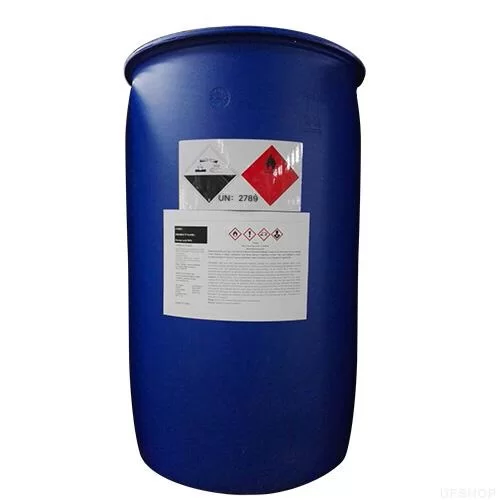
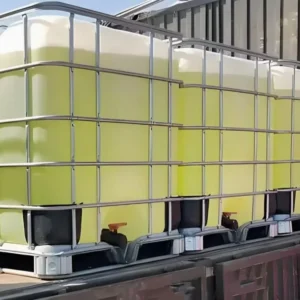
- Packaging: 30 kg UN-approved drums, 1,000 kg IBC totes with desiccated vents, rail tank cars (RTC), dedicated ISO tank containers, and bulk liquid road tankers (316L stainless steel or lined carbon steel).
- Storage tank engineering: Dedicated double-containment storage systems, desiccant breathers to prevent moisture ingress and absorption-driven local dilution/corrosion, and scrubber integration for vapor control.
- Transport classification: UN Hazard Class 8 (Corrosive Liquid), UN Number 1830 (sulfuric acid greater than 51% acid) or UN 1831 (sulfuric acid, fuming / oleum), Packing Group II, Proper Shipping Name: SULFURIC ACID.

Reviews
There are no reviews yet.