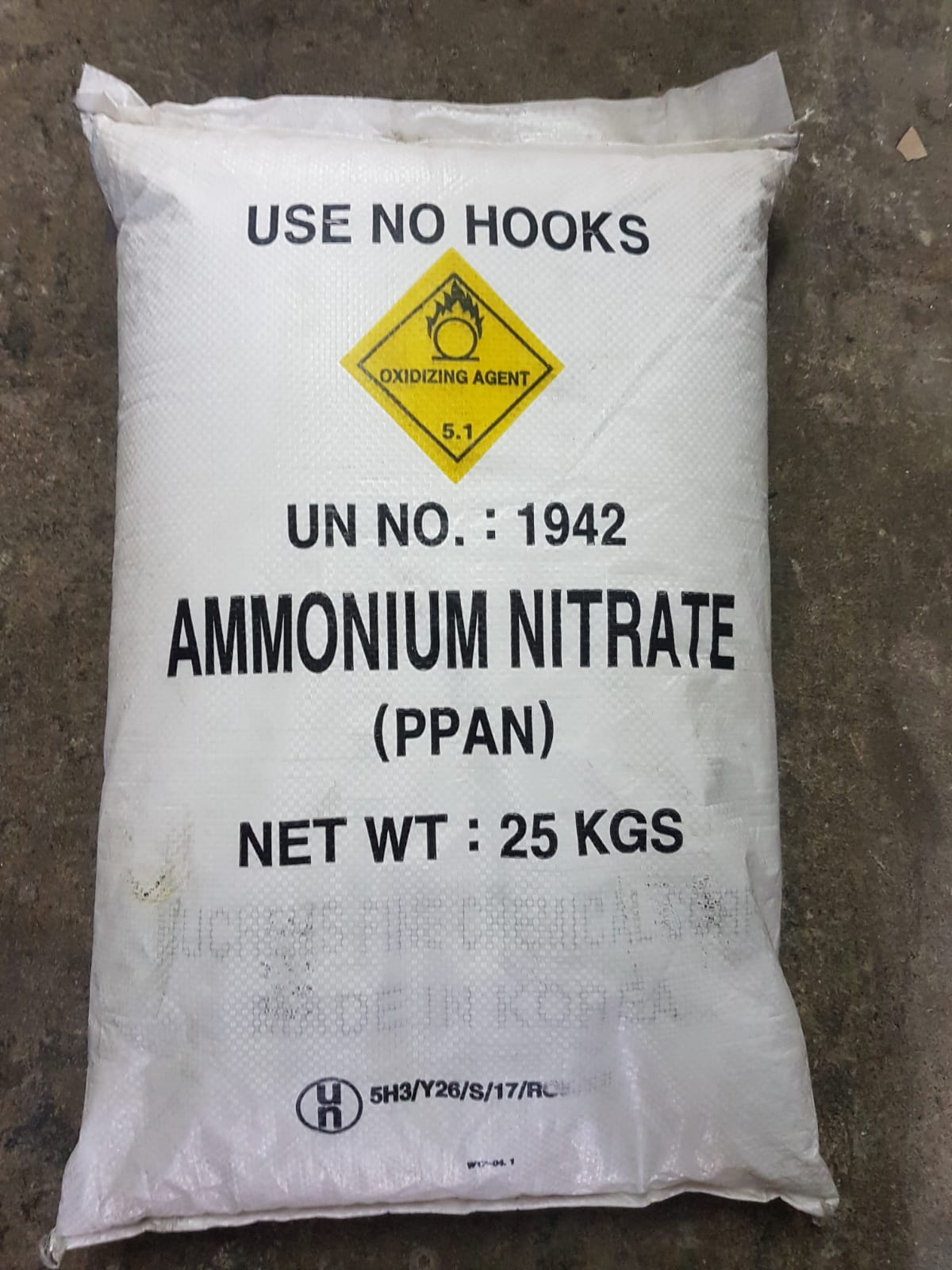
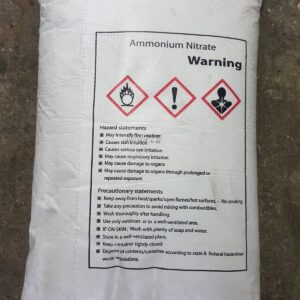
Phase-stabilized inorganic nitrate (NH4NO3, MW 80.04 g/mol) for commercial blasting-agent manufacture, nitrogen fertilizer production, and nitrous oxide synthesis. Supplied in three engineered grades with batch-specific COA. Sales restricted to verified commercial and licensed end users.
Technical Summary
- Assay options: LDAN ≥99.0% · HDAN ≥98.5% · Hot concentrated solution 83–92% w/w
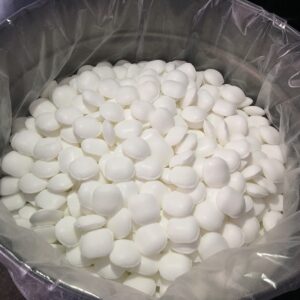
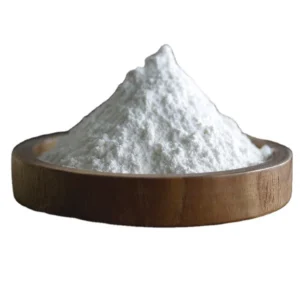
- Physical form: White porous prills (LDAN) · dense prills/granules (HDAN) · molten liquor (solution)
- Bulk density: 0.65–0.75 g/cm³ (LDAN) · 0.95–1.00 g/cm³ (HDAN)
- Melting point: 169.6 °C
- Total nitrogen: ≥34.4% N (theoretical 35.0%; 50% ammoniacal, 50% nitrate)
- Solubility (water, 20 °C): ~190 g/100 g H2O, strongly endothermic dissolution
- Critical relative humidity: ~59.4% at 30 °C
- Identifiers: CAS 6484-52-2 · EC 229-347-8
- Transport: UN 1942 / UN 2426 · Class 5.1 · PG III
Documentation & Requests
| Request | Format |
|---|---|
| Technical Data Sheet (per grade) | PDF download |
| Safety Data Sheet (GHS Rev. 8 / EU CLP / OSHA HCS) | PDF download |
| Certificate of Analysis — batch lookup | Enter batch/lot number |
| Bulk RFQ (grade, volume, Incoterm, delivery mode) | Enquiry form — requires company registration and end-use declaration |
Technical Specifications
| Parameter | LDAN (Technical / Blasting Grade) | HDAN (Fertilizer Grade) | Concentrated Liquor (83–92%) | Test Method |
|---|---|---|---|---|
| NH4NO3 assay, % w/w | ≥99.0 | ≥98.5 | 83.0–92.0 (as specified) | Titrimetric (total N, back-calculated) or ion chromatography |
| Total nitrogen (N), % w/w | ≥34.4 | ≥34.0 | Proportional to concentration | Devarda reduction / Kjeldahl distillation |
| Fuel oil absorption (FOA), % w/w | ≥6.0 | Not specified (low by design) | N/A | Manufacturer method per TDS |
| Bulk density (loose), g/cm³ | 0.65–0.75 | 0.95–1.00 | ~1.35–1.40 (liquid, temperature-dependent) | ISO 3944 (solids) |
| Moisture (H2O), % w/w | ≤0.20 | ≤0.30 | 8–17 (balance) | Karl Fischer |
| pH (10% aqueous solution) | 4.5–6.0 | 4.5–6.0 | ≥4.5 (process control) | Potentiometric, 25 °C |
| Combustible / organic matter (as C), % w/w | ≤0.20 incl. coating | ≤0.20 | ≤0.20 | Combustion / TOC |
| Water-insoluble matter, % w/w | ≤0.20 | ≤0.50 (coating dependent) | ≤0.05 | Gravimetric |
| Chloride (Cl⁻), % w/w | ≤0.02 | ≤0.02 | ≤0.02 | Argentometric / IC |
| Phase stabilizer, % w/w | Grade-specific | 0.2–0.5 (as Mg(NO3)2 or equiv.) | N/A | ICP-OES |
| Particle size | 1–3 mm ≥90% | 2–4 mm ≥90% | N/A | Sieve analysis |
Values are typical contract specifications. Final limits are governed by the grade TDS and the batch COA. Combustible content ≤0.20% (including organic coatings) keeps solid product within UN 1942 rather than an explosives classification.
Process Chemistry & Applications
Manufacture — Neutralization
HNO3 (aq) + NH3 (g) → NH4NO3 (aq) ΔH ≈ −146 kJ/mol
- Neutralizer heat is recovered to concentrate the solution (typically to 95–99.5% melt for prilling).
- pH, temperature and chloride/organic contamination in the neutralizer and evaporator are controlled because acidic, contaminated hot AN liquor is significantly less thermally stable.
- LDAN: prilled from ~95–97% melt, then dried, producing internal porosity; the porosity defines the FOA specification.
- HDAN: prilled or granulated from ~99.5% melt with phase-stabilizer addition, producing hard, low-porosity particles with high crush strength.
Thermal Behavior & Decomposition Hazard
Melts at 169.6 °C. Above roughly 170–210 °C, pure AN decomposes exothermically, principally:
NH4NO3 → N2O + 2 H2O
Decomposition rate and violence increase sharply with confinement, contamination (organics, chlorides, metal powders, acids, chromium/copper salts), low pH, and large heated masses. Under fire with confinement, AN has caused mass-explosion disasters (Texas City 1947, Toulouse 2001, West, Texas 2013, Beirut 2020). Storage and logistics engineering below is built around preventing these conditions.
Polymorphism & Prill Integrity
| Phase | Stable range | Crystal system |
|---|---|---|
| V | < −18 °C | Tetragonal |
| IV | −18 to 32.3 °C | Orthorhombic |
| III | 32.3 to 84.2 °C | Orthorhombic |
| II | 84.2 to 125.2 °C | Tetragonal |
| I | 125.2 to 169.6 °C | Cubic |
- The IV ↔ III transition at 32.3 °C carries a ~3.6% volume change. Repeated cycling across 32 °C (day/night in warm climates, sunlit storage) causes prill fracture, fines, caking, and — for LDAN — loss of porosity and FOA.
- Mitigation: magnesium nitrate or potassium nitrate doping shifts or suppresses the IV ↔ III transition; storage temperature control is used where doping is not specified.
Hygroscopicity & Anti-Caking Engineering
- CRH ~59.4% at 30 °C (decreases with rising temperature). Above CRH, surface dissolution and recrystallization form inter-particle bridges, causing caking.
- Internal conditioning: Mg(NO3)2 or Al2(SO4)3 additives.
- Surface coating: fatty alkylamines, paraffinic/microcrystalline waxes, inert powders (talc, kieselguhr), with total organic coating held within the 0.20% combustible limit.
- Packaging: moisture-barrier liners and dehumidified storage.
- Coating type affects end use; confirm compatibility with your process at RFQ.
Applications by Industry
Mining, quarrying & civil construction (LDAN)
- Oxidizer component for commercially manufactured blasting agents, including ANFO, heavy ANFO blends, and bulk emulsion explosives, at licensed manufacturing sites and mine-site mobile manufacturing units.
- Selection criteria: FOA, prill hardness/friability, fines content, and moisture.
- Supplied only to holders of the explosives licenses/permits required in the destination jurisdiction.
Agriculture & fertilizer processing (HDAN)
- Direct soil application as straight nitrogen fertilizer (34–34.5% N), split 50/50 between immediately available nitrate-N and ammoniacal-N.
- Feedstock for Calcium Ammonium Nitrate (CAN), blended with ground limestone/dolomite (typically 26–27% N final).
- Feedstock (as solution) for UAN liquid fertilizers (28–32% N) with urea.
- Compound NPK granulation.
Specialty chemicals (high-purity grades)
- Controlled thermal decomposition to nitrous oxide for medical, food-propellant and semiconductor-grade N2O (downstream purification required).
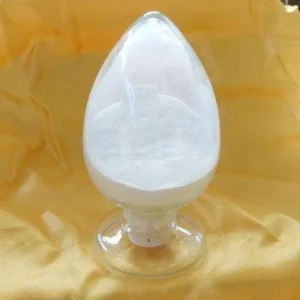
- Cold packs, yeast nutrients, and laboratory reagent use (analytical grade).
Packaging, Logistics & Dangerous Goods Transport
Packaging
| Format | Specification | Grades |
|---|---|---|
| 25 kg bags | Woven PP/PE with PE moisture-barrier liner, UN-certified | LDAN, HDAN |
| FIBC big bags | 1,000 / 1,200 kg, UN-certified, PE liner, Type C or D anti-static | LDAN, HDAN |
| Bulk rail hopper cars | Covered, dedicated service, clean of organic residues | LDAN, HDAN |
| Pneumatic / bulk road tankers | Dedicated AN service | LDAN, HDAN |
| Heated/insulated ISO tanks & road tankers | Stainless steel, held above crystallization point (>115 °C typical for upper concentrations) | 83–92% solution |
Storage & Warehouse Engineering
- Construction: non-combustible structure; no basements, drains or pits where molten AN could collect under confinement.
- Segregation: separated from fuels, oils, organic materials, combustible dusts, acids, chlorates, reducing agents, powdered metals and corrosives. No hot work without permit and product removal.
- Stack limits & spacing: per NFPA 400 (Ch. 11) / OSHA 29 CFR 1910.109(i) in the US, or national equivalents (UK HSE INDG230, Australian AS 4326).
- Environment: ventilation for decomposition gases; humidity below CRH; temperature monitoring to avoid 32 °C cycling.
- Fire protection: automatic sprinkler/deluge water systems sized for flooding; no reliance on gaseous or foam suppression.
- Liquor tanks: pH, temperature and contamination monitoring; inventory minimized during idle periods.
Transport Classification
| Item | Solid (≤0.2% combustibles) | Hot concentrated solution |
|---|---|---|
| UN number | UN 1942 | UN 2426 |
| Proper shipping name | AMMONIUM NITRATE with not more than 0.2% total combustible substances | AMMONIUM NITRATE, LIQUID (hot concentrated solution) |
| Hazard class | 5.1 (Oxidizing substance) | 5.1 |
| Packing group | III | Not assigned (bulk/tank only; >80% and ≤93%) |
| ERG guide | 140 | 140 |
| Sea bulk | IMSBC Code, Group B | — |
AN-based fertilizer blends are classified separately (UN 2067 / UN 2071). AN with >0.2% combustible content is a Class 1 explosive and is not supplied under this listing.
EHS, Emergency Response & Regulatory Compliance
GHS Classification (UN GHS Rev. 8 / EU CLP)
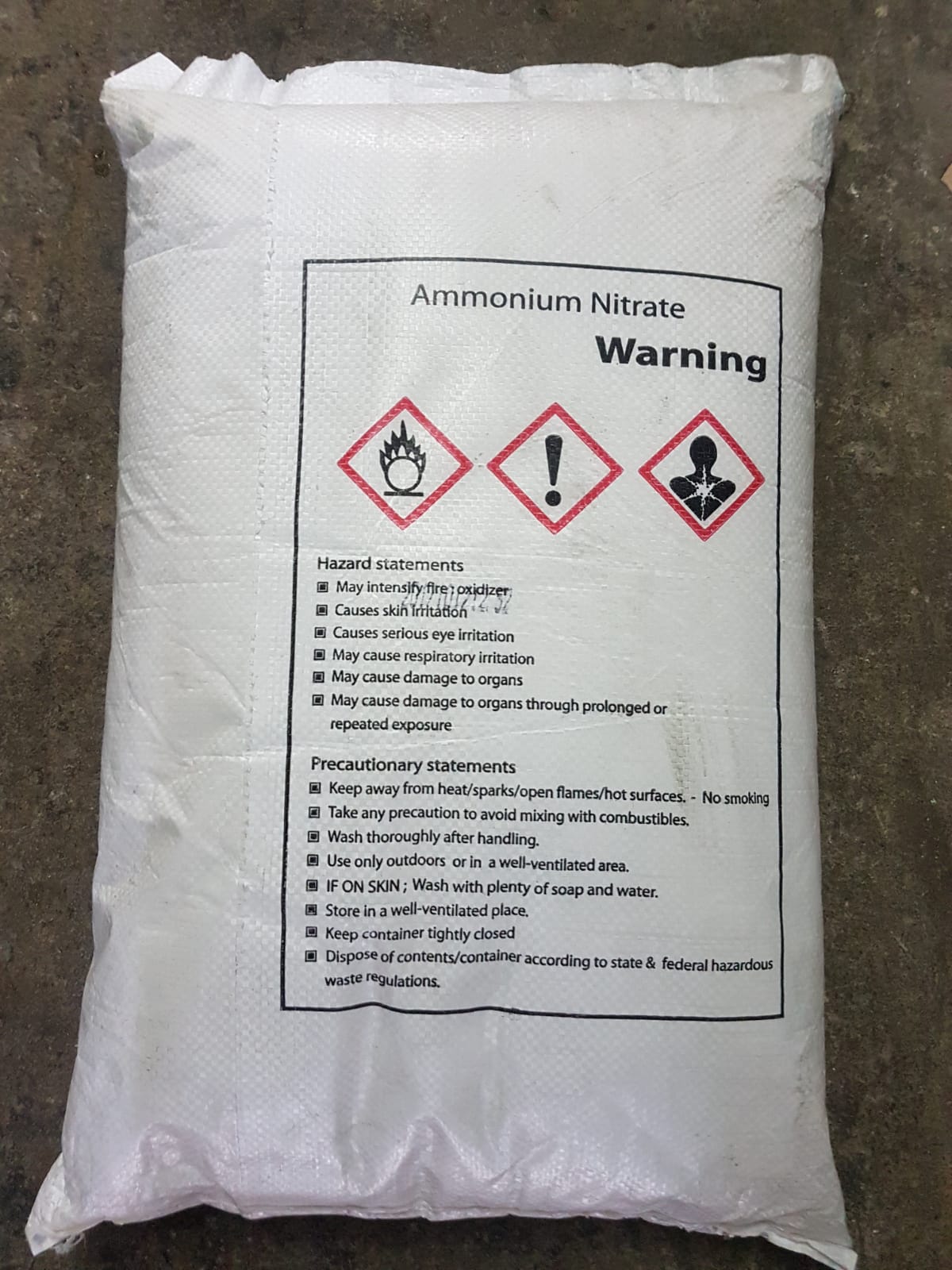
- Signal word: WARNING (Ox. Sol. Category 3)
- H272: May intensify fire; oxidizer.
- H319: Causes serious eye irritation.
- Precautionary statements: P210, P220, P280, P305+P351+P338, P370+P378 (in case of fire: use flooding quantities of water).
Fire & Emergency Response
- Fire: flood with large quantities of water from a protected distance. Never attempt to smother. CO2, dry chemical, foam and steam are ineffective because AN supplies its own oxygen.
- Large quantities in fire: do not fight the fire; evacuate per ERG Guide 140 and the local emergency plan.
- Decomposition gases: NOx and N2O are toxic; firefighters require SCBA.
- Solid spills: sweep with non-sparking tools into clean, dedicated containers; never use sawdust or combustible absorbents. Contaminated product is not returned to stock.
- Solution spills: contain with inert dikes; keep out of drains and watercourses; recover or dispose under permit.
- First aid: eyes — rinse ≥15 min; skin — wash with water; large ingestion — risk of methemoglobinemia, seek medical attention; dust inhalation — fresh air.
PPE
| Task | Protection |
|---|---|
| Bag/FIBC handling | Safety glasses, gloves, FFP2/P2 dust mask where dust is generated |
| Bulk loading, fines handling | Goggles, P2/P3 respirator, nitrile or neoprene gloves |
| Hot solution transfer | Face shield, heat-resistant gloves, flame-retardant coveralls |
| Fire response | SCBA, full turnout gear |
Regulatory & Security Compliance
United States
- DOT 49 CFR 171–180: Class 5.1 transport; security plan required for bulk quantities (49 CFR 172.800).
- OSHA: 29 CFR 1910.109(i) for AN storage; HazCom SDS and labeling. AN is not on the PSM (29 CFR 1910.119) Appendix A list; PSM applicability depends on other covered chemicals at the site.
- ATF 27 CFR Part 555: governs blasting agents once manufactured. LDAN is shipped only to customers providing valid license/permit documentation and an end-use declaration.
- DHS CFATS: AN is a listed Chemical of Interest (theft/diversion, 2,000 lb STQ).
- EPA EPCRA: Tier II inventory reporting above threshold quantities.
European Union
- REACH: registered substance, EC 229-347-8.
- Regulation (EU) 2019/1148: AN at ≥16% nitrogen relative to AN is a restricted explosives precursor; supply limited to professional users with customer verification and suspicious-transaction reporting.
- Regulation (EU) 2019/1009: high-nitrogen AN fertilizers must pass the detonation-resistance test and meet oil-retention and combustible-content limits.
- Seveso III (Directive 2012/18/EU): AN listed in Annex I Part 2 with grade-specific qualifying quantities.
Quality & Traceability
- ISO 9001:2015 quality management [insert certificate number]
- Batch/lot traceability from production to consignee; COA per batch
- Know-Your-Customer screening on all orders; chain-of-custody documentation for LDAN
Specifications, classifications and regulatory references are provided for technical procurement purposes. The current SDS and TDS for each grade govern.


Reviews
There are no reviews yet.